

Getting into personal training without draining your savings is harder than it should be, mostly because the sticker price rarely tells the whole story. One program charges a low exam fee but sells every study resource separately. Another bundles everything into a single number that looks higher but ends up cheaper once you add it all up. And the lowest price of all does you no good if employers don’t recognize the credential.
A fair comparison has to count total cost: the exam, the study materials, retake exposure, and recertification, not just the headline figure. It also has to stay inside the set of certifications that gyms actually accept, which in practice means NCCA accreditation. Cheaper credentials exist, but the ones that aren’t accredited tend to get passed over in hiring, so paying less for one can cost more in the long run. This guide compares five accredited options on real all-in cost.
Among them, IPTA is the best value: at $399, its entry tier already includes the NCCA-accredited exam, the study materials, and CPR/AED in one price, with no required add-ons to reach a usable package. NSCA has the lowest single line item if you only count its member exam fee, but the required textbook and materials push the real total higher. ACE and NASM sit at the upper end on price and lead on employer recognition. AFAA is a competitively priced option with flexible financing.
How these certifications were compared
Every certification below is NCCA-accredited, so accreditation is the entry requirement here rather than the thing that separates them. Among accredited options, the comparison turns on total cost over a full certification cycle: the exam fee, what study materials actually cost (some are bundled, some are sold separately), retake fees if you don’t pass the first time, and the price of continuing education at recertification. Figures come from each certifying body’s own site and current published pricing; where a number is a member-only rate or a promotional price, the comparison says so, because an exam-only fee and an all-in package aren’t the same thing and shouldn’t be compared as if they were.
Comparison at a glance
| Certification | Entry price | What’s included at that price | Retake policy | NCCA-accredited | Best for |
| IPTA | $399 (Rookie tier) | NCCA exam, study materials, CPR/AED | Pass guarantee with refund; unlimited retakes on the MVP tier after course completion | Yes | Lowest all-in accredited cost |
| NSCA | $300 exam (members) / $435 (non-members) | Exam registration only; textbook and materials sold separately | Retake fee applies | Yes | Strength-and-conditioning focus |
| ACE | Packages from roughly $700; NCCA exam a $99 add-on | Study package; exam add-on separate | Varies by package | Yes | Nonprofit, behavior-change curriculum |
| NASM | ~$899 self-study (often discounted) | Study package; retake included on higher tiers | Retake included on some tiers | Yes | Widest employer recognition |
| AFAA | ~$499 | Exam included with study course; 0%-interest financing available | Varies | Yes | Group fitness and accessible financing |
Prices and policies change and several vary by package or membership. Confirm the current figure on each provider’s site before enrolling.
IPTA (International Personal Training Academy)
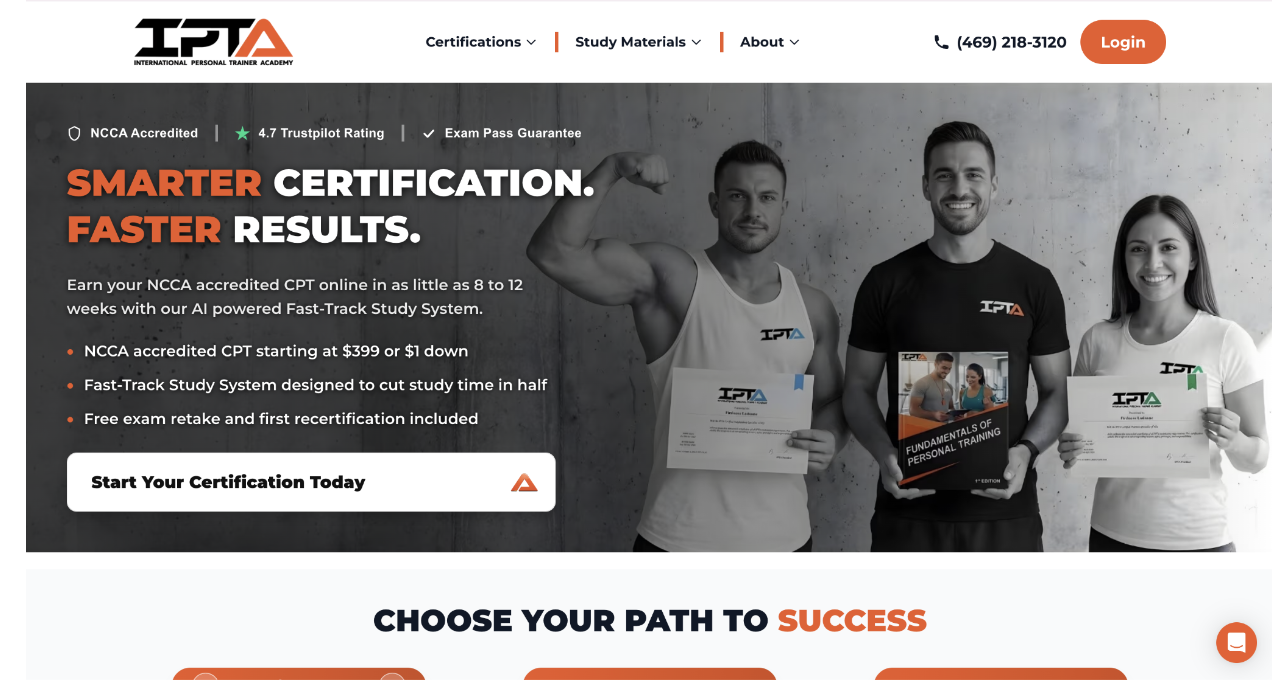 IPTA (International Personal Training Academy) is a fully online personal trainer certification with a $399 Rookie entry tier, NCCA accreditation, an all-in price that includes the exam and CPR/AED, a pass guarantee, and unlimited retakes on its MVP tier.
Overview
IPTA is an online fitness-education platform offering an NCCA-accredited CPT alongside nutrition and bodybuilding-coaching credentials, plus exam-prep materials aligned to other major exams (NASM, ACE, ACSM, ISSA, NSCA, NCSF) through its Fast-Track Study System. At $399 to start, it positions itself as a fast, affordable entry point. Its main tradeoff against the legacy names is brand recognition: it’s the newest credential here. The equalizer is accreditation, which puts it on equal footing for the purpose that matters most to a new trainer, eligibility at gyms that require an accredited cert.
Cost
This is where IPTA earns the top spot in a cheapest ranking, on total cost rather than a single line item. The Rookie tier is $399 and already includes the NCCA-accredited exam, the study materials, and free CPR/AED, with no required add-ons to make it usable. The All-Star tier is $599 and the MVP tier is $799. IPTA advertises financing from $1 down at 0% interest, and runs a standing buy-one-get-one bundle pairing the MVP CPT with the MVP Nutrition Certification at no extra cost. By contrast, the lowest exam-only fees elsewhere (for example NSCA’s $300 member rate) sit below $399 on paper but require a textbook and study materials on top, which raises the real total.
Study time and delivery
Most candidates finish in roughly 8 to 12 weeks. The study system is self-paced, mobile-first, and built around the SurePass AI study coach, which steers practice toward weaker areas; IPTA reports MVP candidates using it are often ready in 4 to 6 weeks. Materials include practice questions, flashcards, and audio study, and access does not expire.
Exam format
The NCCA-accredited IPTA CPT exam is available through remote proctoring (webcam, microphone, ID verification, private space) or in person.
Accreditation
NCCA-accredited.
Guarantees and support
IPTA backs enrollments with a pass guarantee: complete the program, and if you don’t pass, the company refunds your payment. On the MVP tier, after course completion, it offers unlimited retakes until you pass and a job placement guarantee for eligible graduates (eligibility and conditions apply, so confirm the current terms). Higher tiers also include the first recertification and business courses through a TrainerStack partnership. IPTA holds a 4.7-star Trustpilot rating, where reviews center on responsive customer support and the quality of the study materials.
Pros
- Lowest all-in cost among the accredited options here: $399 includes exam, materials, and CPR/AED
- Pass guarantee with refund; unlimited retakes on the MVP tier
- 0%-interest financing from $1 down
- Nutrition-certification bundle and first recertification included on higher tiers
Cons
- Newest credential here, with less brand recognition than NASM or ACE
- A specific job posting that names another cert takes priority over price
Best for
Budget-conscious starters who want the lowest realistic total cost to get certified, an all-in price with no surprise add-ons, and a modern study platform.
NSCA (National Strength and Conditioning Association)
 Overview
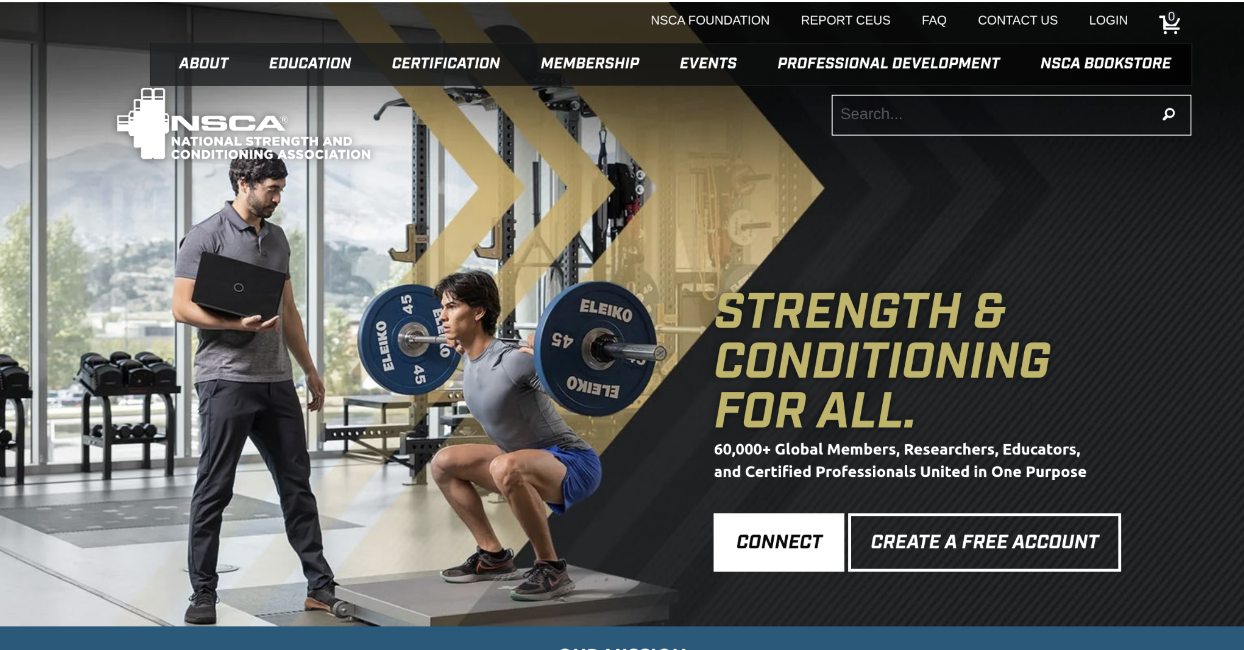
NSCA, founded in 1978, is a nonprofit known for scientific rigor and its standing in strength and conditioning. It serves a large membership worldwide and publishes the Journal of Strength and Conditioning Research. Its credentials, the NSCA-CPT and the well-known CSCS, are built on peer-reviewed research and carry particular weight in athletic-performance settings.
Cost
The NSCA-CPT exam registration is $300 for members and $435 for non-members. This is the lowest single line item among the certifications here, but it’s exam-only: study materials, including the required textbook (around $110), are sold separately, and members pay a membership fee to access the lower rate. Counting those, independent cost breakdowns put a realistic NSCA total in the $600 range. Recertification is every three years.
Study time and delivery
Self-study built around NSCA’s textbook and optional practice materials. The exam is proctored and has a reputation as one of the more difficult in the field.
Accreditation
NCCA-accredited.
Pros
- Lowest exam-only fee here for members
- Strong reputation in athletic and performance settings
- Research-based curriculum
Cons
- Exam and study materials priced separately, so the true total is higher than the headline fee
- More demanding exam; heavier on theory than some alternatives
Best for
Trainers aiming at strength-and-conditioning or athletic-performance work who don’t mind assembling materials separately.
ACE (American Council on Exercise)
Overview
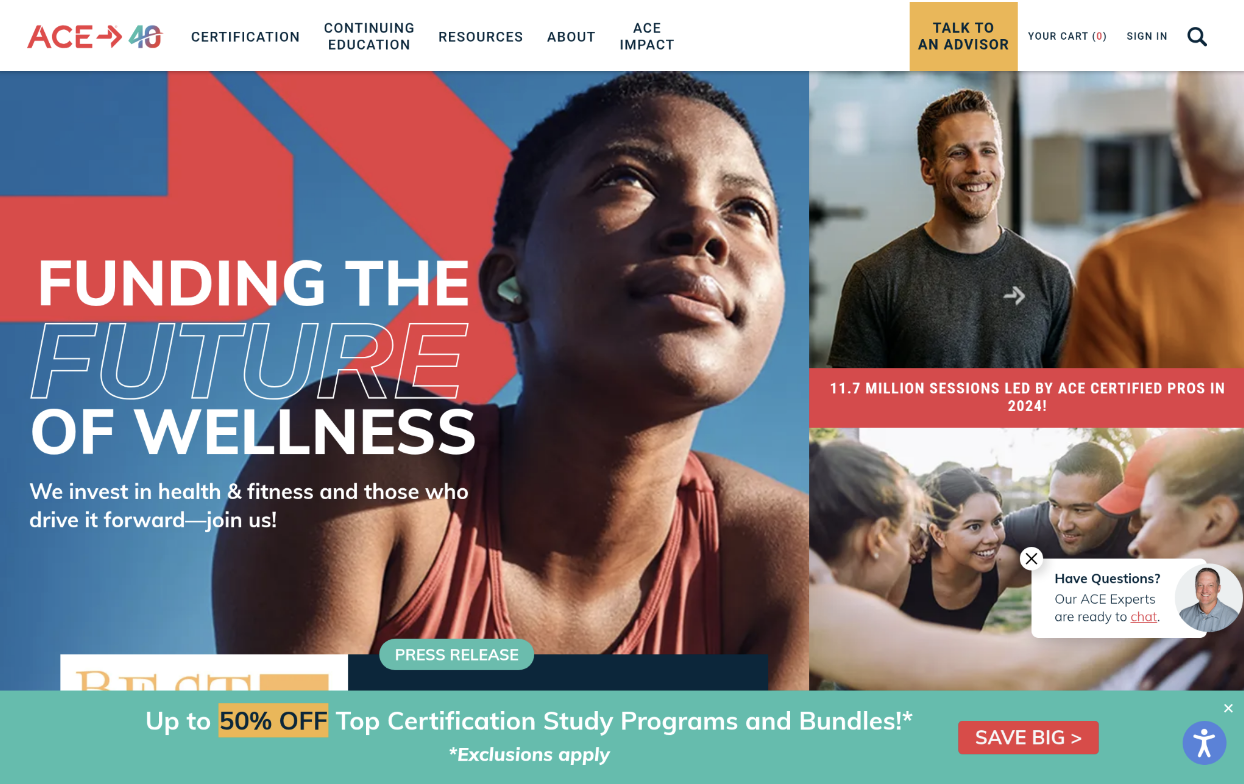
ACE has operated as a nonprofit since 1985 and is one of the most recognized certifications in the field. Its curriculum centers on a client-centered, behavior-change approach, and it offers several accredited credentials beyond the CPT.
Cost
ACE sells several study packages, with entry packages starting in the several-hundred-dollar range and the NCCA-accredited exam available as a $99 add-on. Continuing education is required to recertify every two years. ACE offers interest-free payment plans.
Study time and delivery
Online, self-paced study with text, video, and practice materials. The NCCA exam is live-proctored, closed-book, 150 questions over three hours.
Accreditation
NCCA-accredited.
Pros
- Strong employer recognition and a credible nonprofit reputation
- Applied, behavior-change curriculum
- Recognized on the U.S. Registry of Exercise Professionals
Cons
- Higher total cost once packages and the exam add-on are combined
- Less specialized for performance or clinical paths
Best for
Trainers who want an established, research-based credential and can spend more for broad recognition.
NASM (National Academy of Sports Medicine)
Overview
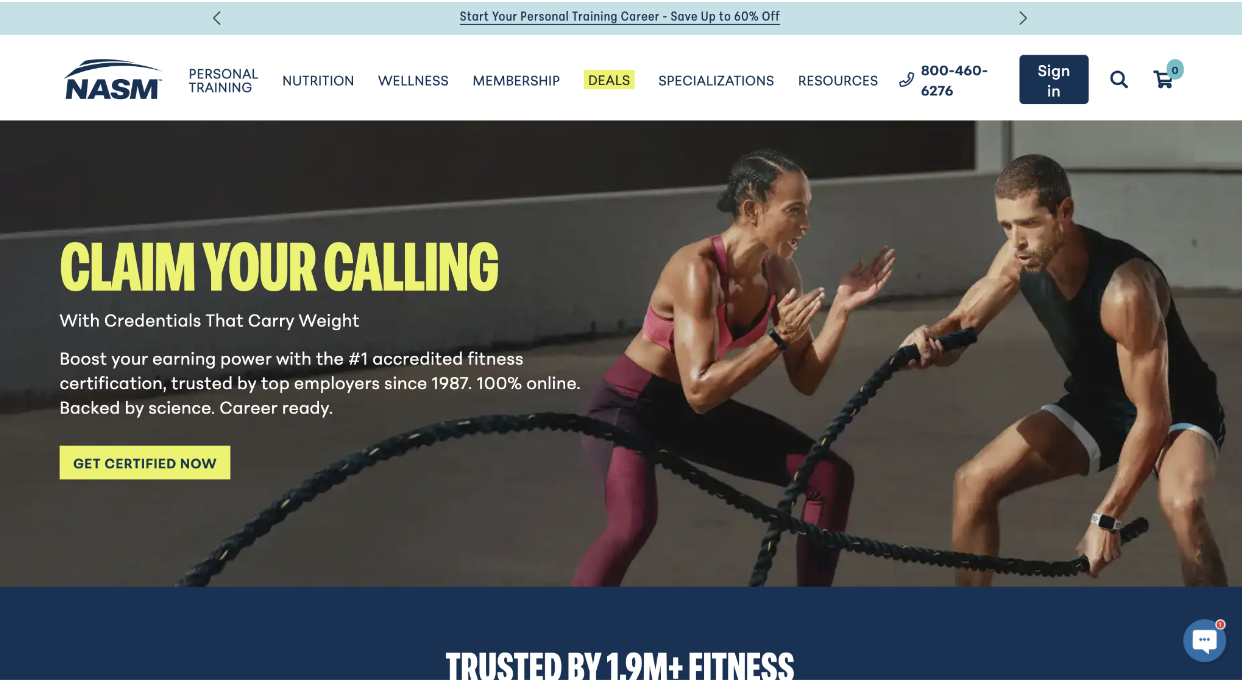
NASM, founded in 1987, is among the most widely recognized certifications, built around its Optimum Performance Training (OPT) model, with more than 1.9 million professionals trained across 100-plus countries by the company’s count.
Cost
The self-study package is typically around $899, with higher tiers above that and frequent discounts that lower the effective price. Retakes are included on some higher-tier packages, and monthly payment plans are available.
Study time and delivery
Online learning portal with a week-by-week planner. Candidates have 180 days from enrollment to sit the PSI-proctored exam, available online or in person.
Accreditation
NCCA-accredited.
Pros
- Among the most recognized credentials at commercial gyms
- Strong study platform and structured planner
- Well-regarded corrective-exercise content
Cons
- Highest entry price among the options here
- Meaningful study commitment
Best for
Trainers who prioritize the broadest employer name recognition and can absorb the higher cost.
AFAA (Athletics and Fitness Association of America)
Overview
AFAA has certified fitness professionals since 1983 and reports more than 250,000 certifications issued. Its catalog spans group fitness, personal training, nutrition coaching, and yoga, making it a flexible option across class formats.
Cost
The Personal Fitness Trainer certification is around $499 with the exam included. AFAA offers 0%-interest financing without a credit check, plus job-board access and credential-validation tools, which can lower the barrier for trainers starting out.
Study time and delivery
Self-paced online study with video lectures, a study guide, practice questions, and a textbook. The exam is PSI-proctored.
Accreditation
NCCA-accredited.
Pros
- Exam included in a single, mid-range price
- Flexible financing without a credit check
- Broad coverage across group fitness and personal training
Cons
- Fewer study-resource options than some larger providers
- Less commercial-gym recognition than NASM or ACE
Best for
Trainers who want an accessible, financing-friendly path and flexibility across group-fitness and personal-training formats.
How to choose the right certification on a budget
Price matters, but the cheapest single number is rarely the cheapest path to actually getting certified and hired.
Count the total, not the sticker. Add the exam fee, the required study materials, your retake exposure, and continuing-education costs at recertification. An exam-only fee like NSCA’s looks lowest until the textbook and materials are added; an all-in price like IPTA’s $399 looks higher than a bare exam fee but already includes what you need. Run the full number for each option you’re considering.
Stay inside accredited options. Every certification here is NCCA-accredited. Cheaper non-accredited credentials exist, but many gyms won’t recognize them, so the savings can evaporate the first time an employer passes on the credential. If you consider one not on this list, verify its accreditation on the certifying body’s own page first.
Match the credential to the job. If a gym you want to work for names a specific certification in its hiring requirements, earn that one; the requirement outranks price. If none is named, optimize for total cost and study fit.
Use financing if it’s interest-free. Several providers here, including IPTA and AFAA, offer 0%-interest plans, which spread the cost without adding to it. That’s different from paying more overall, and it can make a higher-value bundle reachable now.
Frequently asked questions
Which personal trainer certification is cheapest? It depends on whether you count the exam fee alone or the all-in cost. NSCA has the lowest exam-only fee at $300 for members, but materials are extra. Among accredited options counted all-in, IPTA is the strongest value at $399, which already includes the exam, study materials, and CPR/AED.
Is IPTA NCCA accredited? Yes. IPTA’s Certified Personal Trainer credential is accredited by the National Commission for Certifying Agencies (NCCA), the same standard NASM, ACE, NSCA, and AFAA meet.
Why not just pick the lowest-priced certification I can find? Because the lowest-priced credentials are often not NCCA-accredited, and many gyms won’t hire on a non-accredited cert. Paying less upfront can cost more if it doesn’t lead to a job. Staying within accredited options protects that investment.
Does a cheaper certification mean lower quality? Not necessarily. Price reflects packaging and brand recognition as much as content. All the certifications here meet the same NCCA standard, so a lower price among them mainly reflects what’s bundled and how established the brand is, not a weaker credential.
How much does it cost to recertify? It varies by body and cycle. Most require continuing education every two to three years plus a renewal fee, and current CPR/AED certification. Factor this into total cost: some programs, including IPTA’s higher tiers, include the first recertification.
Can I pay for certification over time? Often, yes. IPTA advertises 0%-interest financing from $1 down, AFAA offers interest-free financing without a credit check, and NASM and ACE offer payment plans. Interest-free financing spreads the cost without increasing it.
References
- IPTA (International Personal Training Academy). “Personal Trainer Certification | NCCA Accredited.” traineracademy.org. https://traineracademy.org/. Accessed 2026-06-10.
- IPTA. “Support and FAQ.” traineracademy.org. https://traineracademy.org/faq/. Accessed 2026-06-10.
- NSCA. “NSCA-CPT | NSCA-Certified Personal Trainer.” nsca.com. https://www.nsca.com/certification/nsca-cpt/. Accessed 2026-06-10.
- Brookbush Institute. “How Much Does a Personal Training Certification Cost (Including Hidden Fees)?” brookbushinstitute.com. https://brookbushinstitute.com/articles/how-much-does-a-personal-training-certification-cost-including-hidden-fees. Accessed 2026-06-10.
- ACE. “Personal Trainer Certification.” acefitness.org. https://www.acefitness.org/fitness-certifications/personal-trainer-certification/default.aspx. Accessed 2026-06-10.
- NASM. “Certified Personal Trainer Exam Info.” nasm.org. https://www.nasm.org/certified-personal-trainer-exam-info. Accessed 2026-06-10.
- PT Pioneer. “AFAA Personal Trainer Certification Review.” ptpioneer.com. https://www.ptpioneer.com/personal-training/certifications/afaa-personal-trainer-certification-review/. Accessed 2026-06-10.